Case study · Short-term rentals · owner reporting
Every number in the rental business, in one place
Running a rental portfolio meant checking bookings, pricing, cleaning and the books in different places, then rebuilding the real numbers by hand. Now one dashboard pulls it together every night.
- For
- Our own short-term rental portfolio
- Built
- Owner dashboard, nightly data pulls, P&L
- Business value
- The real numbers every morning, no spreadsheet
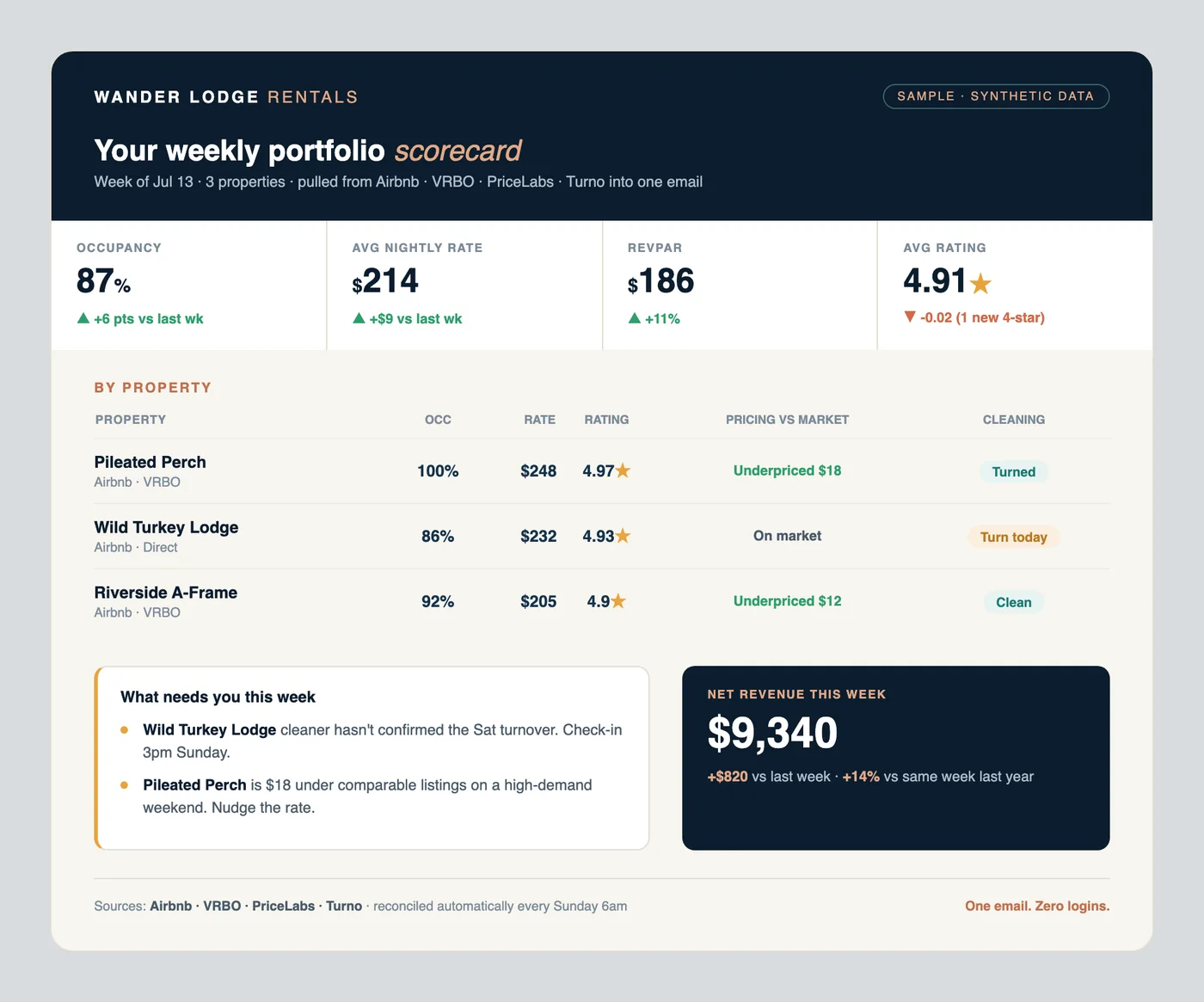
Illustration with sample data. The live dashboard runs on private numbers.
The problem
What wasn't working
A rental portfolio runs on half a dozen tools: the booking platforms, the pricing tool, the cleaning schedule, the bank and the bookkeeping software. None of them talk to each other.
So the simple questions, like which property is actually making money this month, meant logging into everything and rebuilding the answer in a spreadsheet. It rarely got done, and decisions got made on gut feel.
What I built
The short version
- Nightly pulls from the bank feed, the bookkeeping ledger, the cleaning service and the pricing tool
- A profit and loss rebuilt from the raw ledger every night and checked against the bookkeeping software to the cent
- Cash flow, spending trends and returns for each property, next to the targets for each one
- A daily view of what needs attention, plus a warning when any data source stops updating
How it works
Start to finish
- Step 1
It collects overnight
Before the day starts, each source is pulled automatically: transactions, the general ledger, cleaning reports and pricing.
- Step 2
It checks its own math
The rebuilt books have to match the bookkeeping software exactly. If they don't, it says so instead of showing a wrong number.
- Step 3
One place to look
The morning view shows what needs attention today. The money view shows profit, cash flow and returns by property.
- Step 4
It flags its own gaps
If a source hasn't refreshed, a panel says which one and since when, so a quiet failure never passes for good news.
What was hard
The parts that took thinking
Tools that don't want to share
Some services offer no clean way to export data. Each one needed its own reliable way in, with retries when a vendor slows things down.
Numbers you can bet on
A dashboard is only useful if it's right. Every figure traces back to the ledger, and the totals reconcile before anything is shown.
The payoff
What it does for the business
Decisions on real numbers
Which property earns its keep, where money is leaking, and what to change, without a weekend in a spreadsheet.
Hours back every month
No more logging into four tools and stitching the answer together by hand.
Problems caught early
A missed cleaning or a stalled data feed shows up the same morning, not at tax time.
Nightly
refresh of every number, automatically
To the cent
rebuilt books match the bookkeeping software
For a business like yours
Where this fits
This fits any owner who runs on several tools and still can't see the whole business at once:
- A property manager juggling platforms, cleaners and owners
- A service business with sales in one tool and money in another
- An owner who only sees real profit once a year, from the accountant
Want something like this for your business?
30 minutes, no pitch. We talk through where this would fit in your business and what it would take.
Book a free 30-minute callMore case studies
- Custom apparel shop · order intakeOrder intake: 100 emails in, one clean brief out
- Clinical research · inventoryA 33-tab spreadsheet, retired
- Carpet cleaner · website + lead trackingA 46-year-old family business, finally findable
- Shed foundation contractor · websiteA contractor that stops losing jobs to whoever looks bigger online
- Wedding DJ · website + lead trackingFrom an old WordPress page to 40 town pages
- Local service businesses · lead engineWebsites that publish, watch and report on themselves
- Rentals & hospitality · guest marketingGuest Wi-Fi + email marketing. Then Airbnb banned it.
- Fantasy football · hands-off automationA fantasy football team that runs itself